



Press release CITES CoP20 n°10
Fifteen pieces of good news
– South Africa obtained consensus for the transfer of the endemic euphorbia Euphorbia bupleurifolia from Appendix II to Appendix I. It is harvested for use in traditional local medicine and to supply the international horticultural market. Traffickers pass off wild plants as cultivated plants, which is much more profitable than waiting for cultivated Euphorbia bupleurifolia to become saleable. This species has very slow growth. South Africa has been supported by the European Union, one of the main importers, the United Kingdom, Eswatini, Lesotho, Senegal, Benin, Kenya, Malawi, Nigeria, Ethiopia, Zimbabwe, Monaco, Malaysia and India.
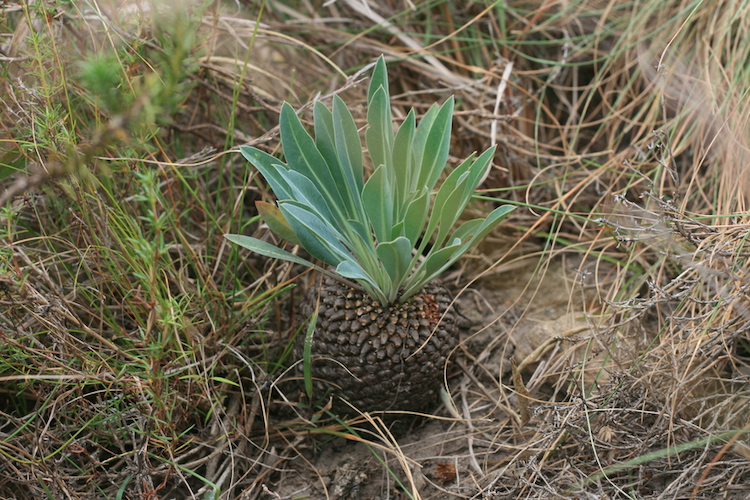
Euphorbia bupleurifolia © Luc Strydom
– South Africa obtained consensus for the transfer of the small succulent Avonia quinaria, which is very popular on the Internet, from Appendix II to Appendix I. A young plant sells for around 20 €. The proposal was supported by Zimbabwe, Eswatini, Lesotho, Burundi, Burkina Faso, Kenya, Namibia, Senegal, Sudan, Rwanda, Tanzania, the European Union, Monaco, the United Kingdom, Malaysia, Pakistan and India.
– Ethiopia obtained consensus for the listing of the Bale Mountains adder (Bitis harenna) and the Ethiopian Mountain adder (Bitis parviocula) in Appendix I. These endemic species have been protected in Ethiopia for 40 years and no exports have been authorised. If you have one at home, it was smuggled in. “It is common practice for reptile collectors to target gravid females in the wild and subsequently offer the young for sale as “captive-bred” once they are born in captivity.”
The proposal was supported by New Zealand, Australia, Djibouti, Tunisia, Côte d’Ivoire, Eswatini, Kenya, Senegal, South Africa, Zimbabwe, the Central African Republic, Iran, Pakistan, Monaco and the United Kingdom. The European Union and Japan would have preferred an Appendix II listing with a zero quota, but they did not oppose the consensus. The United States Association of Reptile Keepers criticised Ethiopia for its lack of knowledge on the subject: “We can provide you with the contact details of breeders in the United States of America, the United Kingdom, Germany, Slovenia and Sweden.” Customs officers would no doubt be delighted to have these addresses.
– Cameroon, Guinea, Nigeria and Togo obtained consensus for the transfer of Home’s hinge-back tortoise (Kinixys homeana) to Appendix I. It is a victim of the bushmeat market, traditional medicine and international trade as a pet. “In Belgium, from 2007 to 2016, Kinixys homeana was the third most seized reptile species,” Togo pointed out. Cameroon, Senegal, the Republic of the Congo, Tunisia, Zimbabwe, Eswatini, Djibouti, Panama, the United States of America and the European Union expressed their support.
Between 2013 and 2025, “On the Trail” recorded seizures of live specimens in South Africa, Belgium and France.
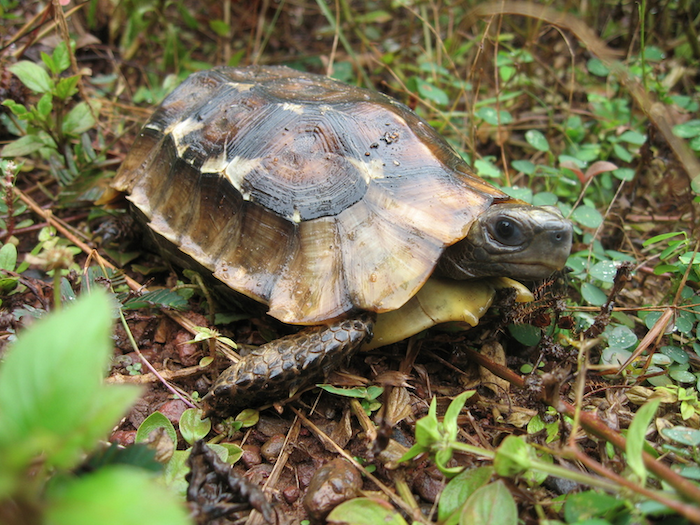
Kinixys homeana © B. Phalan
– The Dominican Republic obtained consensus for the listing of giant galliwasp (Caribicus warreni) in Appendix I. These lizards, which are 20-30 cm long and endemic to the Dominican Republic and Haiti, are victims of the pet trade. The average selling price on the international market is 40 US$ for juveniles and 190 US$ for adults. No individuals have been observed in Haiti for several years: the population was victim to mass harvesting and exports to the United States in the 1990s.
– Australia, the only country in the range area, obtained consensus for the listing of the leaf-tailed geckos Phyllurus amnicola and Phyllurus caudiannulatus in Appendix II. These two species are sought after on the pet market, with a selling price of up to 2,000 US$ per specimen. As their habitats are easily accessible, they are subject to uncontrolled collection in the wild. Many geckos and other small reptiles are smuggled out of Australia, tied up and hidden in socks, packets of crisps or cereal, thermos flasks, deep fryers, rice cookers, toys, soft toys, whether in postal parcels or directly in the suitcases of traffickers.
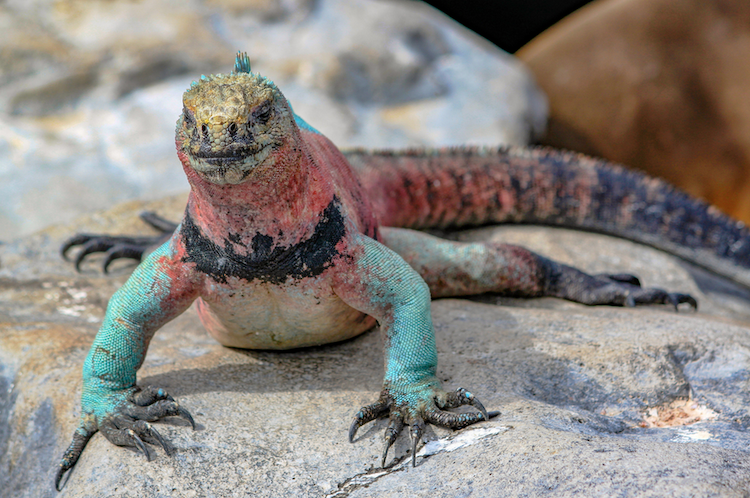
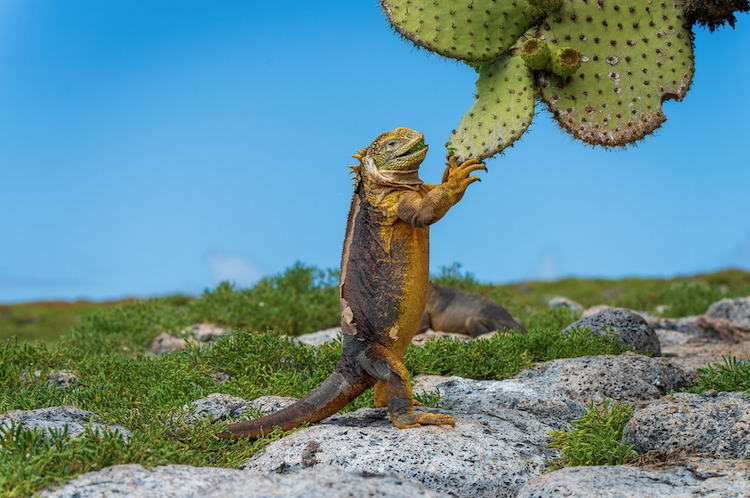
– Ecuador obtained consensus for the transfer of Galapagos marine iguanas (Amblyrhynchus cristatus) and Galapagos land iguanas (genus Conolophus) from Appendix II to Appendix I. These species had been listed in Appendix II since 1975 and no legal exports had been authorised by Ecuador. Since then, CITES has recorded transactions involving specimens described as “captive-bred”. Uganda, one of the main exporters of these captive-bred iguanas, expressed its support for both proposals. Wild specimens have been smuggled into this country and are now being bred illegally. In addition to smuggling, Galapagos iguanas are threatened by the introduction of invasive species into their habitats and by human activities, including tourism, which cause them stress and have a negative impact on their health.
Between 2015 and 2022, “On the Trail” recorded seizures of live specimens in Ecuador and India.
-
- Amblyrhynchus cristatus © Shawn O’Donnell
-
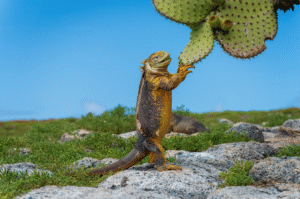
- Conolophus subcristatus © Simon Pierce
– Brazil, Costa Rica and Panama obtained consensus for the listing in Appendix II of Linnaeus’s two-toed sloths (Choloepus didactylus) and Hoffmann’s two-toed sloths (Choloepus hoffmanni).
Between 2014 and 2025, “On the Trail” reported poaching and seizures of live specimens in Brazil, Colombia, Ecuador, Mexico and Peru (including a seizure of 30 Linnaeus’s two-toed sloths bound for Dubai in September 2023).
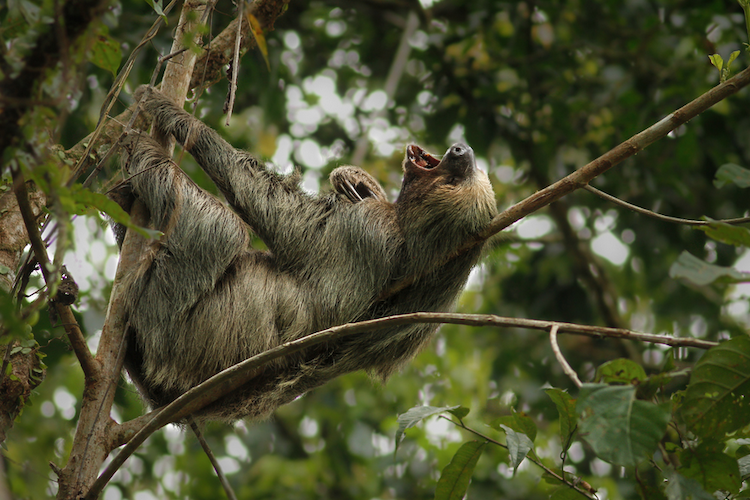
Choloepus didactylus © Julien Renoult
– The Democratic Republic of the Congo, the only country hosting golden-bellied mangabeys (Cercocebus chrysogaster), obtained consensus for their transfer from Appendix II to I.
Between 2020 and 2023, “On the Trail” recorded seizures of live specimens in the Democratic Republic of the Congo and Zimbabwe. They were intended for export by smuggling.
– Cameroon, the Republic of the Congo, Gabon, Niger, Nigeria, Sierra Leone, Senegal and Togo obtained consensus for the listing of African hornbills of the genera Bycanistes and Ceratogymna in Appendix II.
In November 2021, “On the Trail” reported the seizure of 4 live black-casqued hornbills (Ceratogymna atrata) in India
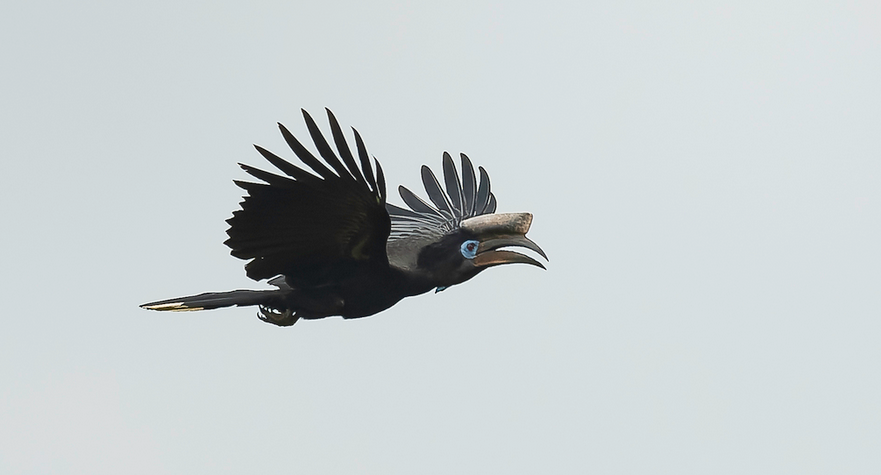
Ceratogymna atrata © Zein et Carlo
– Burkina Faso, Burundi, Benin, Cameroon, the Republic of the Congo, Gambia, Guinea, Niger, Nigeria, Sierra Leone, Senegal, Chad and Togo obtained consensus for the transfer of African vultures (Gyps africanus) and Rüppell’s vultures (Gyps rueppelli) from Appendix II to I.
Between 2013 and 2025, “On the Trail” recorded cases of poisoning and seizures of live specimens, bones, skulls, heads and stuffed specimens in Nigeria, Senegal, Kenya, Mozambique, Uganda, Tanzania, Zimbabwe, South Africa, Botswana, Namibia, the United Kingdom, France and the Netherlands.
– Canada and the United States of America did not succeed in having peregrine falcons (Falco peregrinus) downgraded from Appendix I to Appendix II.
Between 2013 and 2025, “On the Trail” recorded cases of poaching, poisoning, seizures, trafficking, and theft of live specimens, eggs, and stuffed specimens in Egypt, the United States of America, Brazil, French Guiana, Mexico, Kyrgyzstan, Uzbekistan, Taiwan, the Philippines, Thailand, Viet Nam, India, Iran, Pakistan, Azerbaijan, Georgia, Iraq, Jordan, Kuwait, Guernsey (United Kingdom), Ireland, Norway, the United Kingdom, Germany, Belgium, metropolitan France, Switzerland, Spain, Greece, Italy, Montenegro, Hungary, Poland, Russia, Czechia and Ukraine.
– Brazil obtained consensus to list great-billed seed finches (Sporophila maximiliani) in Appendix I and five other “look-alike” species in Appendix II to facilitate the work of customs officers and other control agents.
Between 2013 and 2025, “On the Trail” recorded seizures of live specimens in Brazil, Colombia, French Guiana, Guyana, Panama, Suriname, Trinidad and Tobago, the United States of America, metropolitan France and the Netherlands.
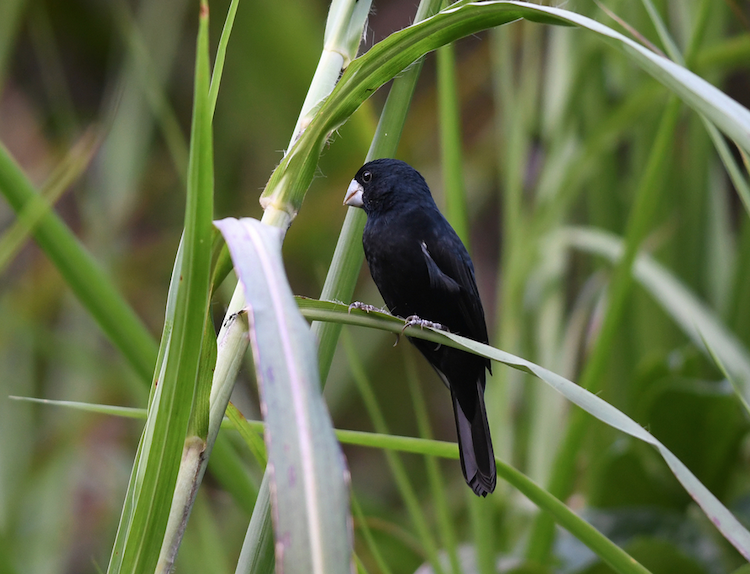
Sporophila crassirostris © Josh Vandermeulen
Three pieces of bad news
– South Africa obtained consensus for the removal of bontebok antelopes (Damaliscus pygargus pygargus) from Appendix II. Only 10,000 specimens remain, a population that the international community considers sufficient for the international trade in its trophies to resume without restriction. A hunting permit for a bontebok antelope costs around 2,000 US$. It is an attraction for foreign sport hunters. South Africa was supported by Namibia, Lesotho, Eswatini, Malawi, Mexico, Canada, the United Kingdom and the European Union. In addition to sport hunting, the main threats to bontebok antelopes are habitat degradation, population fragmentation, loss of genetic diversity and hybridisation with blesbok antelopes (Damaliscus pygargus phillipsi).
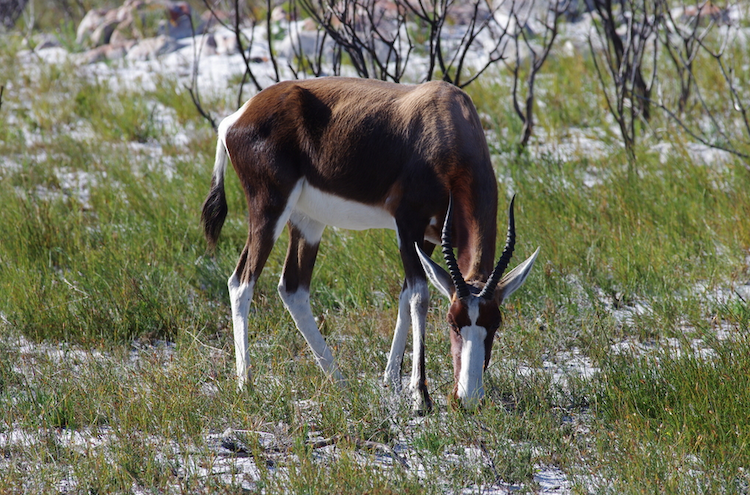
Damaliscus pygargus pygargus © Rémi Cardinael
– Bolivia and Mexico failed to secure the listing in Appendix II of the rock rattlesnake (Crotalus lepidus), the Central Plateau pygmy rattlesnake (Crotalus ravus), and at the same time all rattlesnakes, in order to facilitate the work of customs officers and other control agents. Despite support from Argentina, Brazil, El Salvador, Bolivia, Guatemala, the Republic of the Congo, Senegal, Mali, Monaco, and the Comoros, the proposal was rejected by 45 votes in favour, 66 against, including the United States of America, Zimbabwe, the European Union, and the United Kingdom, and 27 abstentions.
Between 2013 and 2025, “On the Trail” recorded seizures of live specimens, dried meat, heads, cascabel bells and skins in Tanzania, China, the United States of America, Bolivia, Brazil, Colombia, Costa Rica, French Guiana, Mexico, Peru, metropolitan France, Germany, Spain, Norway and Sweden.
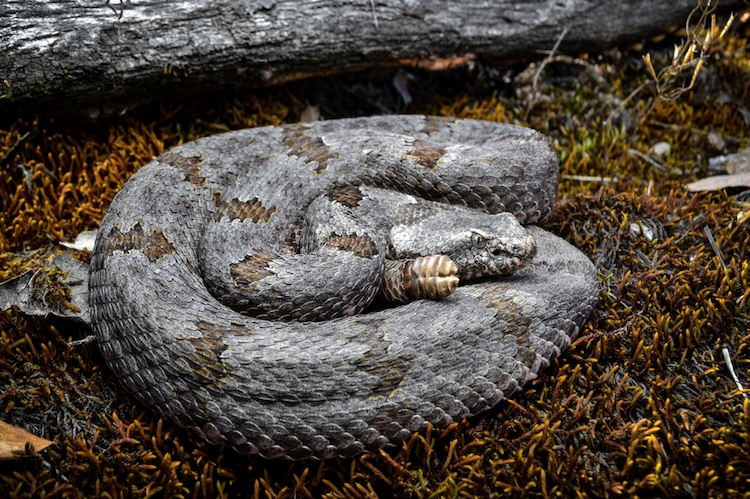
Crotalus lepidus © Bruno Valente
– The rose tarantula (Grammostola rosea) and 14 other species of tarantulas (Acanthoscurria chacoana, Acanthoscurria insubtilis, Acanthoscurria musculosa, Acanthoscurria theraphosoides, Avicularia hirschii, Avicularia rufa, Avicularia avicularia, Catumiri argentinense, Cyriocosmus bertae, Cyriocosmus perezmilesi, Hapalotremus albipes, Holothele longipes, Pamphobeteus antinous and Umbyquyra acuminatum) will not be included in Appendix II. The proposal by Argentina, Bolivia and Panama was rejected by secret ballot, with 72 votes in favour, 54 against and 9 abstentions. Perhaps this proposal will be brought up again in plenary today or tomorrow. The United States of America, 13 countries in Central and South America, 10 countries in Africa, Sri Lanka and Iran expressed their support. Canada, Japan, the United Kingdom, the European Union and its member States were not in favour. The group of breeders and sellers of animals in aquariums, terrariums and cages was up in arms. TRAFFIC and IUCN (International Union for Conservation of Nature) intervened to say that trafficking in these wild tarantulas is limited and that the 15 species do not meet the criteria for Appendix II.
Between 2014 and 2024, “On the Trail” recorded seizures of live specimens in Brazil, the United Kingdom, France, Spain, China and India.
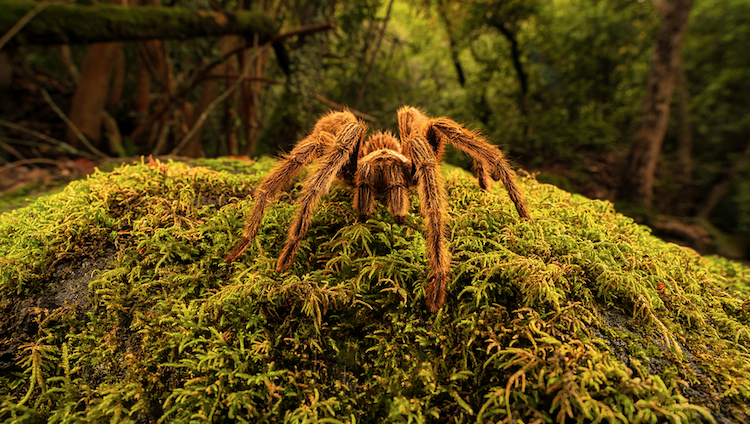
Grammostola rosea © Juan Rodolfo Lillo Lobos
See all Robin des Bois publications on CITES CoP20 in Uzbekistan
 Imprimer cet article