



March 4, 2026 – 3 p.m.
Following the Israeli-American raids on Iran, the logistical and economic Middle East is paralyzed.
Air freight and passenger traffic is suspended in Kuwait, Iraq, Qatar, Bahrain, Syria, Lebanon, Jordan, Iran and Israel. Maritime traffic is frozen in the Persian Gulf. 3,000 merchant ships are stuck. On the basis of 15 crew members per ship, 45,000 sailors are being held hostage. Most of them are Filipinos, Indians or from other countries that have nothing to do with the current conflict. Shipping in the Red Sea is exposed to reprisals from the Houthi rebels. The ‘experts’ are worried about the disruption of trade in strategic fields such as gas, oil, raw materials for plastics, cars and even cosmetics.
The NGO Robin des Bois (Robin Hood) based in Paris, specialized in shipping, is also concerned about the fate of live ‘goods’ – cows, sheep and goats – exported from South America, the European Union and countries in the Horn of Africa to Saudi Arabia, the United Arab Emirates, Lebanon, Iraq, Israel and Jordan. On the basis of available information, at least 70,000 animals are being held hostage in the Eastern Mediterranean and the Red Sea.
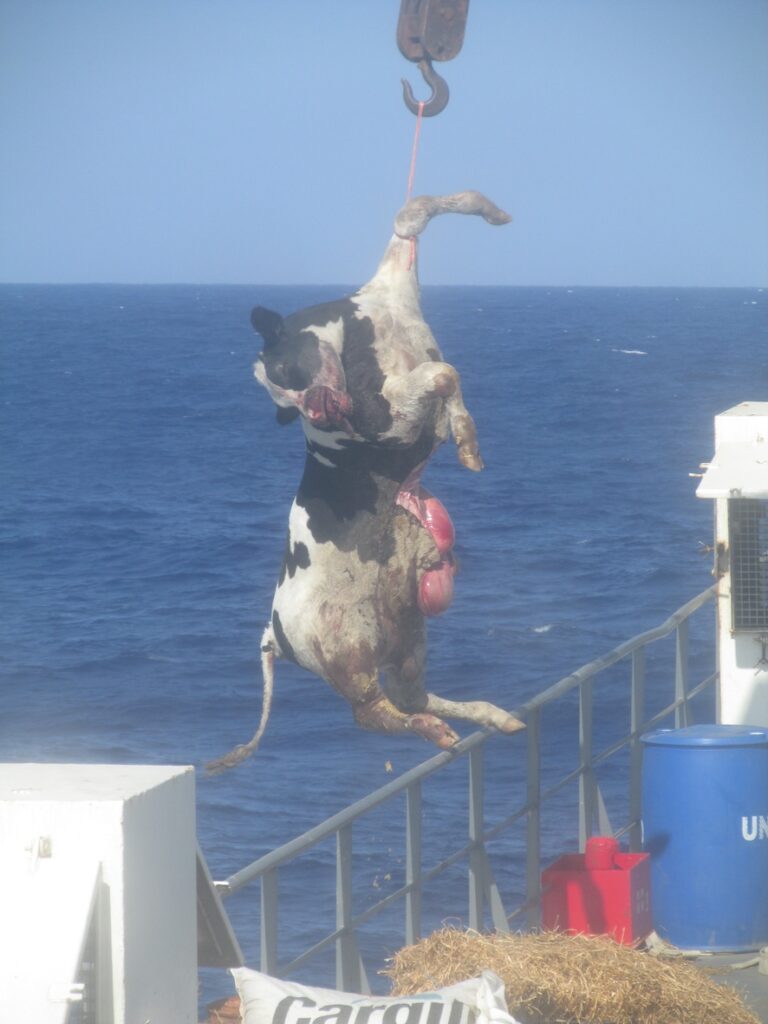 A dead heifer is thrown into the sea from the Karim Allah (October 2016).
The Karim Allah is currently heading for Beirut (Lebanon) © Animal Welfare Foundation
Six maritime livestock carriers overloaded with animals are currently in the conflict zone. Under normal circumstances, conditions on board are deplorable. In times of war, global epidemics, epizootics or the unavailability of the Suez Canal due to an accident (e.g. the grounding of the Ever Given in March 2021), they are hellish due to refusals and delays in unloading.
– The Al Mabrouka-10, from Digna (Sudan), is currently in Jeddah (Saudi Arabia).
– The Balha One, from Rio Grande (Brazil), is heading for the Suez Canal after a technical stopover in Cartagena (Spain).
– The Mariona Star, bound for Jeddah from Tartous (Syria), is currently in the Red Sea.
– The Mayar, bound for Jeddah from Berbera (Somalia), is currently in the Red Sea.
– The Maysora, from Vila do Conde (Brazil) bound for the United Arab Emirates or Iraq, is in the Suez Canal.
– The Tuleen, from Koper (Slovenia), is currently approaching Haifa (Israel).
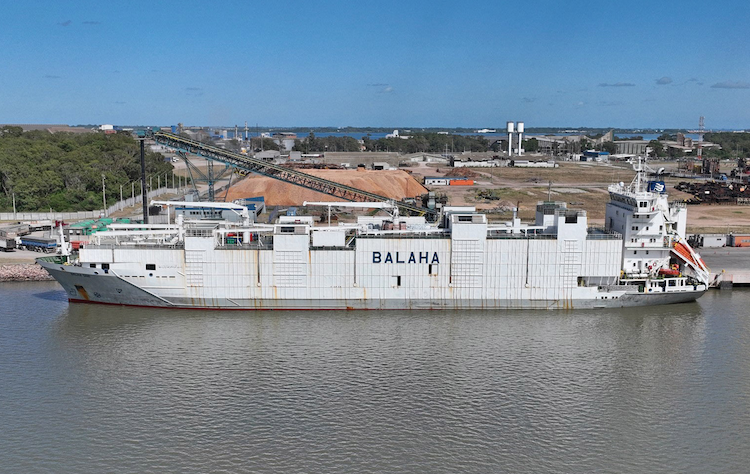 Balha One,capacity 4,500 cattle.
February 7, 2026, Rio Grande (Brazil) © Marcelo Vieira
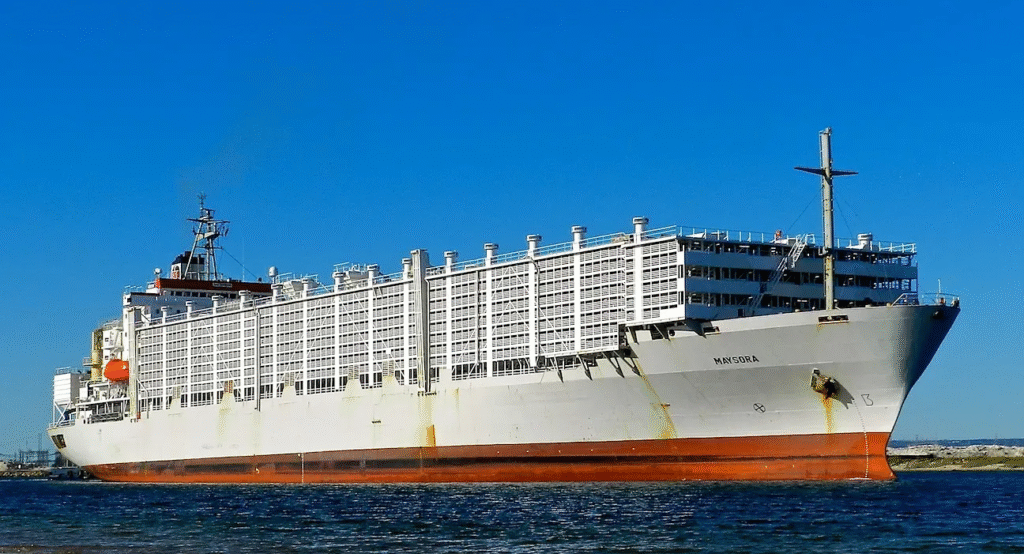 Maysora, capacity 17,400 cattle.
August 22, 2014, Adelaide (Australia) © Trevor Powell
Seven maritime cattle trucks overloaded with animals are heading for the conflict zone:
– The Al Farouk, bound for Beirut (Lebanon) from Reni (Ukraine), is currently south of Cyprus.
– The Galloway Express, bound for Ashdod (Israel) from Montevideo (Uruguay), is currently opposite Crete.
– The Julia Ak, bound for Jeddah (Saudi Arabia) from Vila do Conde (Brazil), is currently off Mauritania.
– The Karim Allah, bound for Beirut (Lebanon) from Reni (Ukraine), is currently in the Sea of Marmara.
– The Norland, bound for Beirut (Lebanon) from Vila do Conde, is currently between Malta and Crete after a technical stopover in Cartagena (Spain).
– The Rami M, bound for Beirut from Vila do Conde, is currently in southern Cyprus after a stopover in Benghazi (Libya).
– The Taiba, bound for Aqaba (Jordan) from Vila do Conde, is currently off the coast of Crete after a technical stopover in Cartagena.
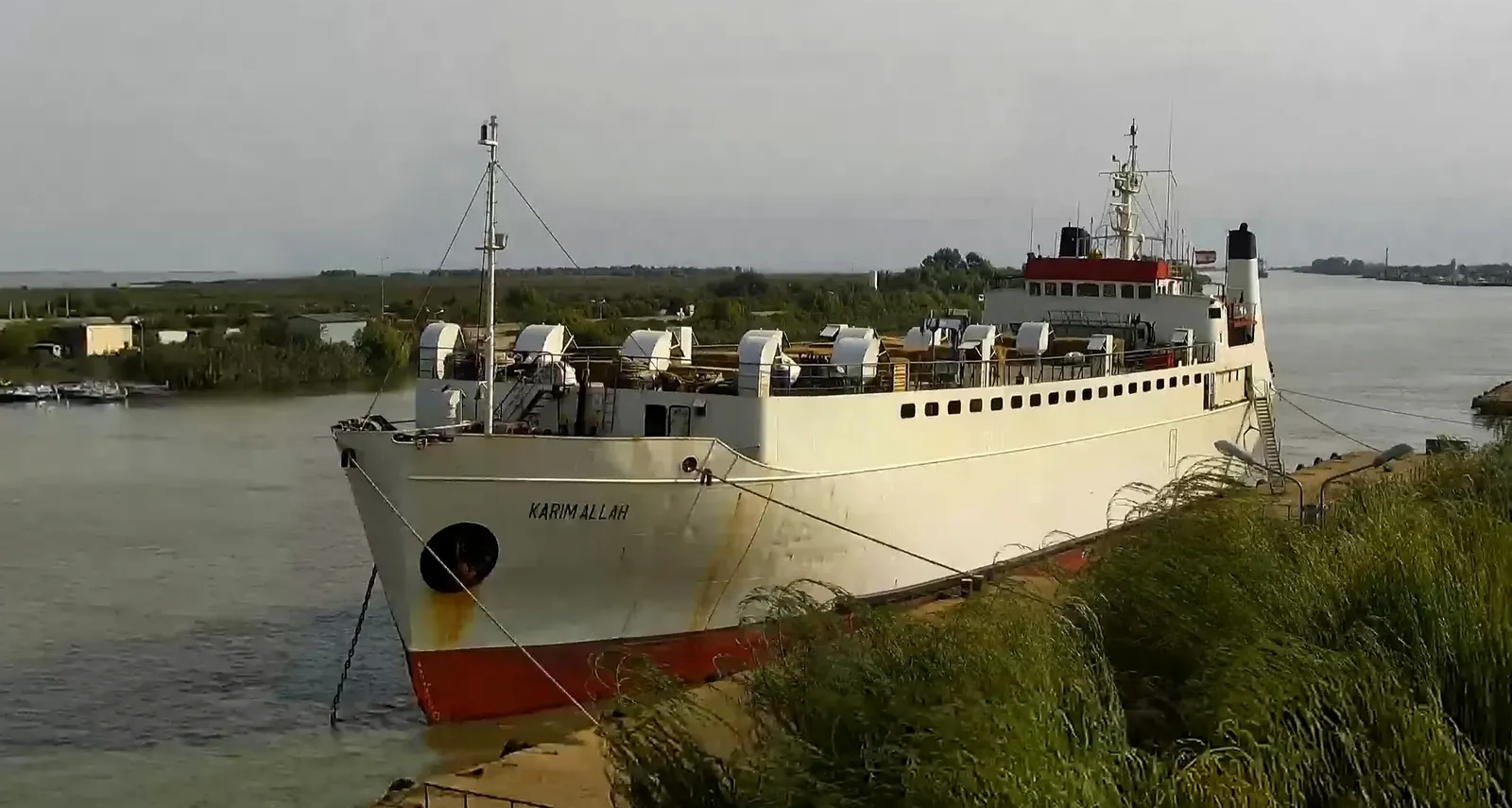 Karim Allah, capacity 900 cattle
October 2, 2024, Sulina (Romania) © Philippe Lauga
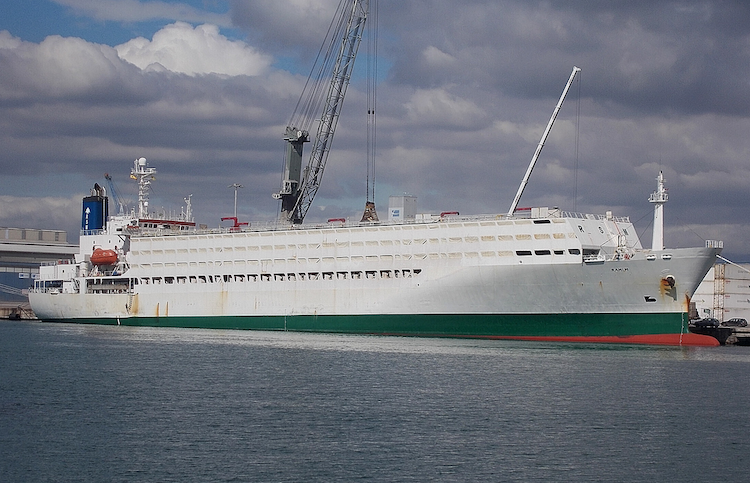 Rami M, capacity 6,800 cattle.
March 24, 2025, Tarragona (Spain) © fran-tgn
A report produced by Robin des Bois with the Brazilian NGO Mercy for Animals on the export of livestock from South America will be published in the coming weeks.
 Imprimer cet article