



A new international report reveals that the global livestock carrier fleet consists predominantly of decades-old converted cargo ships. Of the world’s 159 officially registered livestock carriers, 133 were not originally built to transport live animals. These converted vessels are significantly more likely to suffer from serious technical deficiencies than purpose-built livestock carriers and are detained by port authorities far more frequently. Nevertheless, they transport tens of millions of live animals across the world’s oceans every year.
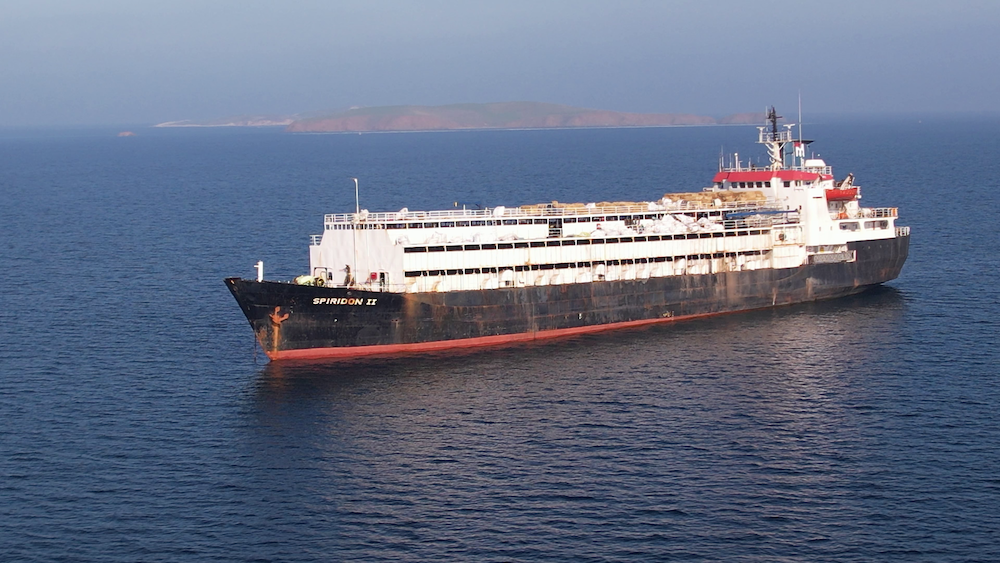 The Spiridon II, 2025
© Animal Welfare Foundation | Tierschutzbund Zürich | Animal Save Movement Türkiye
The case of the livestock carrier Spiridon II, which is currently before the courts, illustrates just how devastating the consequences can be. Last autumn, the 53-year-old vessel transported nearly 3,000 cattle from Uruguay to Türkiye. Even before departure, the ship experienced technical problems and lengthy delays. Many of the cattle were forced to give birth under appalling conditions during the voyage. After the vessel was refused permission to unload, the animals remained stranded on board for weeks. Hundreds of them died.
“Spiridon II is not an isolated tragedy but symptomatic of a poorly regulated industry that has relied for years on ageing, substandard vessels while treating sentient animals as nothing more than cargo,” said Maria Boada Saña of the German Animal Welfare Foundation.
Together with the French organisation Robin des Bois and the Swiss Tierschutzbund Zürich, it analysed the global livestock carrier fleet. The report paints a picture of an industry characterised by ageing converted vessels, recurring safety deficiencies and inadequate oversight.
84% of all 159 livestock carriers were originally built as conventional cargo ships and converted into livestock carriers decades later. “On average, these vessels are now 45 years old, have accumulated 242 technical deficiencies and have been detained by port authorities four times,” said Jacky Bonnemains, director of Robin des Bois.
In 2024, deficiencies were identified during 88% of all inspections of livestock carriers. A total of 15% of the vessels were detained – almost four times the average detention rate for all ship types. “Despite transporting sentient animals, livestock carriers have been the world’s most dangerous fleet for six consecutive years. Our report shows that many of these vessels should have been retired long ago,” Boada Saña said.
The consequences of this ageing fleet extend far beyond animal welfare. Nearly one third of the ships inspected violated international environmental regulations in 2024–2025. Due to their age, many livestock carriers fail to comply with the International Convention for the Prevention of Pollution from Ships (MARPOL). At the same time, violations of international labour standards were recorded on 60 vessels, including deficiencies relating to crew accommodation, working conditions, wages and social protection.
More than half of the fleet sails under flags listed on the Paris Memorandum of Understanding Black List. Many vessels are certified by classification societies that do not meet the highest international standards. Complex ownership structures involving shell companies further obscure accountability.
“The report clearly shows that these problems extend well beyond animal welfare. They also affect maritime safety, the protection of the marine environment and the working conditions of seafarers,” said Bonnemains.
 On board the Spiridon II, 2025
© Animal Welfare Foundation
“It’s unbelievable – the chief engineer of the Al Maha, now known as the Al Fahad 1, remained on board for 13 years of hard labour without wages.” “In some cases, animal faeces from the upper decks flow into the feed and water troughs on the lower decks,” insists Charlotte Nithart, chair of Robin des Bois.
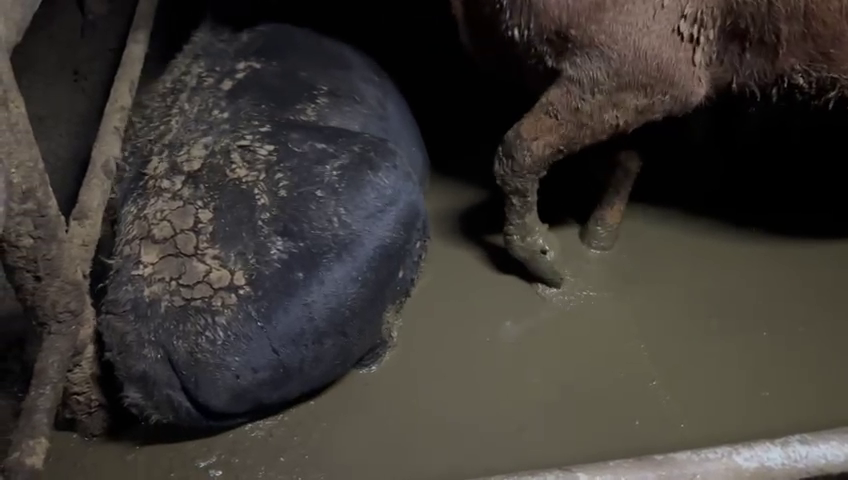 On board the Spiridon II, 2025
© Animal Welfare Foundation
The organisations therefore urge the governments of all countries involved in the trade of live animal export by sea to take decisive action:
- Enforce higher standards and close loopholes.
- Protect animals, people and the ocean.
- Ban live exports and end this cruelty.
As long as the transport of live animals relies on a fleet consisting predominantly of decades-old converted cargo ships, serious incidents such as the Spiridon II case will remain a systemic risk – for animals and people alike.
You can download the full report here (pdf 413 pages, 13.6 Mo).
The infographic (pdf)
The Video:

 Imprimer cet article